The Hundred Acre Wood is full of wonderfully different personalities. There is a bear who gets distracted by honey, a piglet who worries about almost everything, a tiger who never seems to run out of energy, and a donkey who rarely expects a happy ending. Together, they offer an interesting starting point for conversations about mental health.
A tongue-in-cheek 2000 paper, Pathology in the Hundred Acre Wood, explored psychiatric interpretations of Milne’s characters. These associations are not official diagnoses, nor is there evidence that A. A. Milne deliberately created his characters to represent particular disorders. Still, they invite us to think about how we understand behaviour.
Winnie-the-Pooh is often associated with ADHD because of his distractibility, impulsivity and intense focus on honey.
Piglet is linked to anxiety because he frequently anticipates danger and worries about unfamiliar situations.
Eeyore is commonly interpreted through the lens of depression because of his persistent pessimism and low mood. These similarities are illustrative, not diagnostic.
Tigger, with his boundless energy, impulsiveness and difficulty slowing down, is sometimes compared with ADHD or hyperactive behaviour.
Rabbit, who prefers order, routines and control, is occasionally associated with obsessive-compulsive traits. But liking things organised is not the same as having obsessive-compulsive disorder (OCD).
Owl, who enjoys appearing knowledgeable but often gets things wrong, is sometimes interpreted as having learning difficulties, particularly dyslexia, in popular discussions. His mistakes alone, however, cannot establish any learning disorder.
Kanga is often read as the responsible, protective caregiver, while Roo represents a curious, energetic young child. Neither character’s ordinary behaviour provides a sound basis for assigning a mental-health diagnosis.
Christopher Robin, meanwhile, is the imaginative child who brings the group together; his role is better understood through childhood, creativity and relationships than through a psychiatric label.
It is tempting to assign each of them a diagnosis and call it a day. What makes the characters interesting is not the labels we can attach to them. It is what happens when their differences meet.
In everyday life, we sometimes respond to another person’s sadness with an urgency to make it disappear. We say, “Look on the bright side,” “Other people have it worse,” or “You just need to get out more.”
Usually, we mean well. We want the person we love to feel better. But our discomfort with their sadness can lead us to rush them through it. The problem is that reassurance can become dismissal when it leaves no room for what someone is actually experiencing.
Lesson – Sometimes, friendship means listening without demanding a happier ending to the conversation.
Anxiety is not always visible, and it is not necessarily something a person can switch off because another person says there is nothing to worry about. What appears trivial to one person may feel overwhelming to another. Telling someone not to be anxious rarely helps them understand or manage their anxiety. Listening, asking what would make a situation easier, and offering support without taking away their choices can be more useful.
Piglet also reminds us that courage and fear can coexist. A person does not have to stop feeling frightened before they can do something meaningful.
Lesson – a good friend does not need to turn every anxious moment into a lesson in bravery. Sometimes, they simply accompany you.
Pooh is distractible, impulsive at times and often guided by immediate interests. Rabbit can be controlling and impatient. Their personalities create much of the humour in the stories, but they also show how easily differences can become sources of irritation. In real relationships, we often have little patience for the ways other people inconvenience us. We call someone lazy when they struggle to get things done. We call someone dramatic when their feelings seem excessive. We call someone difficult when their needs don’t fit comfortably into our routines.
Sometimes, a behaviour genuinely hurts another person and needs to be addressed. Compassion does not require us to excuse everything. But there is a difference between setting a boundary and reducing a person to their most frustrating behaviour.
Lesson – A diagnosis, where one exists, should not become someone’s entire identity. Nor should a fictional character become a shortcut for understanding a real person’s mental health. The better question is not, “Which character are you?” It is, “What might you need, and how can we treat one another fairly?”
What the Hundred Acre Wood gets right
Friends cannot diagnose one another from a collection of familiar habits. They cannot guarantee that love will cure depression or that reassurance will eliminate anxiety. Persistent distress may require professional assessment and treatment.
What friendship can offer is something different: a relationship in which a person does not have to conceal every struggle to remain welcome. That might mean checking in after someone has withdrawn, offering practical help when everyday tasks become difficult, or asking whether they would like company or some space. It also means recognising our own limits. Supporting someone does not require us to become their only source of help, and caring for another person should not mean abandoning our own well-being. The strongest friendships make room for honesty, boundaries and support beyond the friendship itself.
The inhabitants of the Hundred Acre Wood do not always understand one another. They can be impatient, mistaken and occasionally unhelpful. Their relationships are not perfect examples of emotional intelligence. But their world allows different temperaments to coexist. Eeyore can remain Eeyore. Piglet can be frightened. Rabbit can be particular. Pooh can be Pooh. Their differences do not automatically disqualify them from belonging.
Perhaps that is the most useful lesson we can take from these stories, which is, not every difficult behaviour should be accepted without question, but the people deserve to be understood as more than their difficult moments.
We don’t have to diagnose a friend to listen to them. We don’t have to agree with every feeling to take it seriously. And we don’t have to know exactly what to say to offer kindness.
Sometimes, the most helpful question is also the simplest: “What would help you right now?”
The Hundred Acre Wood is fiction, and mental health is far more complex than any collection of children’s characters can explain. But stories can give us a language for beginning conversations that might otherwise feel uncomfortable.
If Pooh and his friends can remind us to approach one another with a little more patience, curiosity and care, then their world has something to offer beyond nostalgia.
Not a cure. Not a diagnosis. Just a place to begin.
Imagine a bear who has no grand ambitions, loves honey a little too much and somehow turns an ordinary walk through the woods into an adventure. He isn’t trying to be extraordinary. He is simply Pooh, and perhaps, that is precisely why we have loved him for so long.
Alan Alexxander Milne aka A. A. Milne (18 Jan, 1882 – 31 Jan, 1956)
On 14 October 1926, British author A. A. Milne introduced readers to Winnie-the-Pooh, illustrated by E. H. Shepard and published by Methuen & Co. in London. In 2026, the beloved children’s book celebrates its hundredth anniversary.
A bear with a story of his own
Pooh’s origins lie in the real world. Milne’s son, Christopher Robin Milne, had a collection of stuffed animals that inspired the characters in the stories. The name Winnie came from a bear at London Zoo, while Pooh was a name associated with a swan. These familiar toys eventually became the inhabitants of the Hundred Acre Wood.
Ernest Howard Shepard (10 Dec, 1879 – 24 Mar, 1976)
But the stories owe much of their magic to Shepard’s illustrations. His delicate line drawings gave Pooh, Piglet and Eeyore their unmistakable personalities. Inspired partly by the landscape of Ashdown Forest in Sussex, the Hundred Acre Wood feels like somewhere a child might discover just beyond the garden gate.
Ernest Howard Shepard’s original illustration of Winnie-the-Pooh
The book was followed by The House at Pooh Corner in 1928. Decades later, Disney brought Pooh to new audiences through animation, helping transform Milne’s literary creation into a global cultural icon. Yet the original illustrations retain a charm of their own, that is quiet, expressive and full of room for imagination.
Why we still need the Hundred Acre Wood
Ernest Howard Shepard’s original illustration of the Hundred Acre Wood
Perhaps Pooh’s greatest achievement is not that he has entertained generations, but that he reminds us of things adulthood can make us forget.
His world isn’t built around achievement, productivity or being the most impressive person in the room. His friends are anxious, gloomy, bossy or occasionally rather silly. They misunderstand one another, get into trouble and keep coming back. Nobody needs to be perfect to belong.
There is something comforting about that.
In a world where even our hobbies can become goals and our quiet moments can feel like wasted time, Pooh invites us to slow down. To notice the trees. To spend an afternoon with a friend. To let an ordinary day be enough.
Perhaps children love Pooh because he makes the world feel larger. Adults return to him because he makes it feel gentler.
A hundred years after his first book appeared, the little bear still has something to teach us: a meaningful life need not be spectacular. Sometimes, it is made of familiar paths, imperfect friendships and small adventures.
And sometimes, all you really need is a pot of honey and someone to share the afternoon with.
There are people everywhere. So why does it sometimes feel like nobody is really there?
There is a particular kind of loneliness that happens in crowded places. It happens on a Delhi Metro when the carriage is full but nobody looks up. It happens at a party where your phone is in your hand because you don’t quite know who to talk to. It happens at the dinner table, while everyone is technically together and yet each person is somewhere else. Either, inside a screen, inside their thoughts, or inside a life that nobody else can quite enter. It happens when your Instagram is full of names but your heart cannot think of one person to call. And perhaps most painfully, it happens when someone asks, “How are you?” and you automatically say, “I’m fine,” even though what you really want is for them to ask again and wait long enough for the real answer. Surprisingly, we face it in an era where we have never had more ways to reach one another. Messages arrive instantly. Friends live inside our phones. Family groups buzz throughout the day. We can watch someone’s life unfold from another continent. We can send a photograph of our breakfast to someone who has never sat at our table. And yet, somehow, many of us still feel alone.
So perhaps the question isn’t: Why are there so few people around us? Perhaps it is: Why can so many people be around us without making us feel seen?
Loneliness is not the absence of people
John Terrence Cacioppo (June 12, 1951 – March 5, 2018)
Psychologist and neuroscientist John Cacioppo spent decades studying loneliness, and one of his most important observations was deceptively simple: loneliness is not determined by the number of people around us. You can be lonely in a marriage. You can be lonely in a family. You can be lonely in a friendship. You can even be lonely in a crowd. Cacioppo explained that what matters is not simply the quantity of interaction but the quality of connection. As he put it, “it’s feeling connected to other people that makes them feel less lonely.” That changes the way we understand loneliness. Because perhaps the person sitting alone in a café isn’t necessarily lonely. Perhaps she is reading a book, drinking coffee, watching the rain, and perfectly content in her own company. Meanwhile, the person laughing loudly at a party might be desperately lonely. The difference is not solitude. It is connection. Solitude says: I am alone, and I am with myself. Loneliness says: I am alone, and I wish someone could reach me here.
Psychological research similarly distinguishes loneliness from simply being physically alone. The American Psychological Association describes loneliness as the discomfort that arises when we perceive ourselves as socially isolated. In other words, loneliness is partly a perception of distance. And distance can exist between two people sitting three inches apart.
We don’t just want company. We want recognition. There is something deeper beneath our desire for companionship. We want to be known. Not merely noticed. Not liked. Not followed. Known.
We want someone to understand the strange little things about us: why a particular song makes us quiet, why we suddenly become anxious before something that seems insignificant, why we don’t like being asked questions in front of everyone, why we keep returning to the same street, the same book, the same memory. We want someone who knows that when we say “nothing’s wrong,” sometimes something is. This is where loneliness becomes emotional rather than merely social.
You can have hundreds of interactions in a week and still never reveal anything that feels vulnerable. You can talk all day without ever having a conversation. You can be listened to without feeling heard. You can be loved without feeling understood. And perhaps this is one of the great contradictions of modern life: we have become exceptionally good at staying in contact and strangely inexperienced at being in relationship.
The psychologist who taught us that humans need attachment
Edward John Mostyn Bowlby (26 February 1907 – 2 September 1990)
Long before smartphones, social media or dating apps, British psychologist and psychiatrist John Bowlby was studying something fundamental about human beings: our need for attachment. His attachment theory proposed, in broad terms, that human beings are biologically and emotionally oriented toward forming close bonds.
Cacioppo later connected this understanding to loneliness, noting Bowlby’s observation that being separated from one’s caretaker, particularly in childhood, could be experienced as profoundly threatening. The important idea is not that we are weak because we need other people. It is almost the opposite. Needing connection is part of being human. The fantasy of complete emotional independence is, in many ways, rather unnatural. We need people. We need witnesses to our lives. Someone to tell when we have had a terrible day. Someone to celebrate with when something unexpectedly wonderful happens. Someone who remembers the story behind the scar. Someone who notices that our voice sounds different today. Someone who can sit beside us without requiring us to perform. This is why loneliness can hurt so deeply.
It isn’t simply boredom. It can feel like being psychologically unanchored. And then society changed.
But loneliness isn’t only a psychological problem. It is also a sociological one.
Robert David Putnam (January 9, 1941) at present of age 85 years
This is where the work of sociologist Robert Putnam becomes fascinating. In Bowling Alone, Putnam examined the decline of community participation in American life as people joining fewer organisations, socialising less often, knowing their neighbours less, and participating less frequently in collective activities. His argument was not simply that people had become lonelier, it was that the social structures that once produced everyday connection were weakening. His metaphor was brilliant. People were still bowling. They were simply bowling alone. The bowling alley remained. The activity remained. But the league of the repeated gathering of people, the familiar faces, the conversations, the small rituals, it was disappearing. And that distinction matters. Because communities are not created merely by putting people in the same place. They are created through repetition. Seeing the same shopkeeper. Greeting the same neighbour. Meeting the same friends every Sunday. Going to the same library. Playing the same sport. Attending the same class. Knowing that somebody will notice if you don’t show up. These tiny repetitions create something psychologists and sociologists recognise as meaningful social connection. They make us part of something larger than ourselves.
We have replaced many of our “third places”
There used to be many places where people could simply be around one another. The neighbourhood park. The local tea shop. The library. The community centre. The place of worship. The sports ground. The college canteen. The barber shop. The corner café. These weren’t necessarily destinations. They were third places, the spaces outside home and work where ordinary social life could happen. And something important happened there. You didn’t necessarily go looking for a best friend. You simply kept encountering human beings. A conversation could begin because somebody was sitting beside you. A friendship could emerge because you saw the same person every Tuesday. A neighbour could become familiar because you happened to walk past each other every evening. Modern life, however, has made it increasingly possible to design our social lives around convenience and preference.
We can order food without speaking to anyone. Work without leaving home. Shop without entering a store. Exercise alone. Watch films alone. Listen to music alone. Travel without speaking to strangers. And consume almost any form of entertainment without another human being physically present. None of these things is inherently bad. But together, they can quietly remove the accidental encounters through which community is often built.
Putnam’s concept of social capital is useful here: social networks are valuable not simply because they make us feel warm and loved, but because trust, reciprocity and relationships create practical and collective benefits. A society can therefore have millions of connected individuals and still have weak community.
Then came the phone
And then, of course, there is the small glowing rectangle we carry everywhere. Our phones solved one problem beautifully: distance. But they may have complicated another: presence.
Sherry Turkle (June 18, 1948) at present of age 78 years
Sociologist Sherry Turkle has spent years examining the relationship between technology, conversation and intimacy.
Her TED talk ‘Connected, but alone?’ asks a question that feels increasingly relevant: as we expect more from technology, do we begin to expect less from one another? Her concern isn’t simply that people use technology. It is that technology can give us the feeling of connection without necessarily giving us the vulnerability of genuine companionship. Turkle has argued that technology can offer us an “illusion of friendship without the demands of companionship.” And that phrase deserves to sit with us. Because companionship asks things of us. It asks us to listen. To wait. To tolerate awkward silences. To hear boring stories. To stay when someone is difficult. To be inconvenienced. To put the phone down. To allow another person to be complicated. A notification asks none of these things.
We are becoming very good at being perceived
There is another strange development of the digital age. We can now be constantly seen without necessarily being known. We post what we ate. Where we travelled. What we wore. What we read. Who we celebrated. What we believe. What we accomplished. Our lives can be beautifully documented.
But documentation is not intimacy. Someone can know what you did yesterday without knowing how yesterday felt. They can know your favourite songs without knowing why you need them. They can know your relationship status without knowing whether you feel loved. They can watch your life and still have no idea what is happening inside you. This is perhaps why social media can sometimes make loneliness feel sharper rather than softer. You aren’t simply alone. You are watching everyone else appear connected.
Cacioppo observed that loneliness can heighten sensitivity to social threats and make people more focused on themselves and their perceived isolation. The lonely mind can therefore become a terrible editor. It notices the couple holding hands. The group laughing. The birthday dinner. The wedding photographs. The friend who has “their people.” And quietly asks: Where are mine?
But there is another side to the story
It would be easy to blame phones. They are convenient villains. But loneliness existed long before Instagram. People have felt lonely in marriages for centuries. People have sat at family dinners feeling misunderstood. People have moved to new cities and struggled to belong. People have felt lonely in crowded cities since cities existed.
The technology can also create real connection.
Someone studying abroad can speak to their mother every evening. A lonely teenager can find a community that doesn’t exist in their physical surroundings. A person grieving can find others who understand a loss their immediate circle cannot comprehend. A long-distance friendship can survive because of a screen. The question, therefore, isn’t: Are phones making us lonely? It is: What kinds of connection are we using technology to create and what kinds are we allowing it to replace?
Even Cacioppo’s work did not reduce technology to a simple villain. Communication technologies can facilitate connection when they are used to organise or deepen real relationships; the problem arises when apparent connection substitutes for meaningful contact. That distinction matters.
Sometimes the problem is not that nobody loves us
Sometimes the problem is that we don’t know how to let ourselves be loved. This may be the most uncomfortable part. Loneliness can coexist with an inability to become vulnerable. We might want intimacy while fearing it. We might want someone to ask what is wrong while becoming irritated when they do. We might crave closeness and then disappear when someone gets too close. We might complain that nobody understands us while never allowing anybody to see the parts of ourselves we are embarrassed by. This doesn’t mean lonely people are responsible for their loneliness. It means loneliness can become a cycle.
Cacioppo described how perceived isolation can trigger a kind of self-protective state: when people feel socially threatened, they can become more vigilant and self-focused, which can make connection harder. So the lonely person may begin wanting people desperately while simultaneously protecting themselves from them. The door is locked. And they are standing behind it, wondering why nobody comes inside.
There is a difference between attention and intimacy
Perhaps our culture has confused these two. Attention says: Look at me. Intimacy says: Know me. Attention can be measured by: Views. Likes. Replies. Followers. Messages. Intimacy cannot. You cannot count how many times someone made you feel safe. You cannot calculate the value of a friend who sat beside you when you had nothing interesting to say. You cannot measure the person who remembers your coffee order after three years. You cannot put a number on being able to walk into someone’s house without knocking. These are small things, but human beings are made from small things.
Maybe we don’t need more people
Maybe we need more belonging. There is an important difference. We live in a culture obsessed with expansion. More followers. More friends. More networking. More invitations. More contacts. More conversations. But loneliness doesn’t necessarily require a larger social circle. Sometimes it requires a deeper one. John Cacioppo repeatedly emphasised that the quality of relationships matters. Robert Putnam’s work similarly shows why networks become meaningful through trust, reciprocity and repeated interaction rather than through a mere accumulation of contacts.
Julianne Holt-Lunstad (Born 1971)
And psychologist Julianne Holt-Lunstad’s work has helped establish social connection as an important factor in health, with supportive relationships associated with better health outcomes and social isolation and loneliness linked to significant risks. So perhaps the answer isn’t: Meet more people. Perhaps it is: Let a few people become real to you.
We also need to learn how to be alone
This sounds contradictory. If loneliness comes from disconnection, shouldn’t we simply surround ourselves with people? Not necessarily. Solitude and loneliness are not opposites. Sometimes solitude is what allows us to hear ourselves clearly enough to connect with somebody else. Sherry Turkle has argued that the capacity to be alone matters precisely because without it, we can become dependent on constant external validation.
Her formulation is striking: “If we don’t teach our children how to be alone, they will always be lonely.” There is wisdom in that. If every quiet moment must be filled with a notification, video, message or voice, we never learn what our own company feels like. And someone who cannot tolerate their own company may eventually ask another person to perform an impossible job: make me feel whole. No friend can sustainably do that. No partner can. No audience can. No number of followers can. Connection should not erase the self. It should give the self somewhere safe to exist.
So what are we actually missing?
Perhaps it is not people. Perhaps it is witnessing. We want somebody to witness our lives. The ordinary parts. The embarrassing parts. The beautiful parts. The unfinished parts. The version of ourselves that isn’t ready for Instagram. We want someone who knows what our face looks like when we are trying not to cry. Someone who knows the joke behind our silence. Someone who notices when our energy changes. Someone who can sit beside us while nothing happens.
This is why the deepest relationships often don’t feel spectacular. They feel ordinary. A cup of tea. A walk. A shared meal. A message saying “Reached?” A friend remembering something you mentioned six months ago. A parent saving the last piece for you. Someone waiting outside. Someone asking again. Someone staying. Perhaps this is what we have been searching for beneath all the noise. Not more interaction. More recognition.
The loneliness paradox
Here is the strange thing: We can be surrounded by people and lonely. We can be alone and peaceful. We can have thousands of followers and no confidant. We can have one person and feel deeply held. We can live in a crowded city and feel invisible. We can sit silently beside someone and feel understood. Loneliness, then, is not a geography. It is a relationship between the inner world and the world around us. And perhaps that is why it can be so difficult to explain. Because from the outside, everything can look perfectly fine. You go to work. You answer messages. You laugh. You attend parties. You post photographs. You make plans. You come home. Nobody sees the distance. Nobody sees the quiet ache of wanting to say: “I wish someone really knew me.”
Maybe the way back begins very small
Not with becoming more popular. Not with forcing yourself into a hundred social situations. Not with collecting acquaintances. Perhaps it begins with one honest conversation. Calling someone instead of sending a reaction. Asking a friend a question and actually waiting for the answer. Sitting beside someone without reaching for your phone. Joining something you will attend every week. Learning the names of the people you repeatedly encounter. Going somewhere often enough that you become familiar. Letting yourself be a beginner. Inviting someone for tea. Saying, “I’ve been feeling lonely lately.” And perhaps, most importantly, allowing somebody else to say it too. Because loneliness becomes less frightening when it stops being a private shame.
We are not failing at being social
Perhaps we are simply living through a period in which the old structures of belonging are changing faster than we have learned to replace them. The family is changing. Work is changing. Cities are changing. Friendship is changing. Religion and community are changing. Technology has changed how we meet. Mobility has changed where we live. And the internet has changed who we can know.
Sociologists studying loneliness increasingly look beyond individual psychology toward these broader social structures, including individualisation and the weakening of communal ties. So maybe loneliness isn’t merely a personal problem waiting for a personal solution. Maybe some of it belongs to the world we have built. And if that is true, then the answer cannot only be “learn to cope.” We may also have to learn how to build community again.
Perhaps we need to stop asking, “How many people do you know?” And start asking: Who would notice if you disappeared for a week? Who can you call when something wonderful happens? Who can you sit beside without performing? Whose sadness would you recognise? Who knows the version of you that exists when nobody is watching? Those questions tell us much more about our social lives than a follower count ever could. Because the opposite of loneliness isn’t popularity. It isn’t constant conversation. It isn’t being surrounded. It is the quiet knowledge that somewhere, with someone, you belong. And perhaps in a world that has become extraordinarily good at connecting us, that is the thing we are still learning how to create. A place in another person’s life where we don’t have to introduce ourselves.
So, can we actually solve loneliness?
Maybe “solve” is too ambitious a word. Loneliness is not a mathematical problem waiting for the correct answer. It is part of being human. We will move cities. We will lose people. Friendships will change. Relationships will end. There will be seasons in which we are surrounded and seasons in which we are not. The goal, perhaps, isn’t to build a life in which we never feel lonely. It is to build a life in which loneliness doesn’t have to become our permanent address. And that begins much closer to home than we might expect. First, we have to become more comfortable with ourselves. This sounds almost too simple, but it matters. If every quiet moment feels unbearable, we will spend our lives trying to escape ourselves through people, screens, work, entertainment and noise. Solitude can become a place of return.
Read somewhere without photographing it. Walk without headphones sometimes. Eat a meal without reaching for your phone. Go to a library and sit among strangers. Write down what you are actually feeling before immediately telling somebody what you think you should be feeling. Being alone is not the same as being abandoned. Learning that difference gives us something precious: the ability to be alone without experiencing ourselves as unwanted. And perhaps that makes it easier to enter relationships not because we desperately need somebody to rescue us from ourselves, but because we genuinely want to share our lives with them.
Then, we have to become braver with other people. We complain about shallow conversations while rarely being the person who takes one deeper. Ask the second question. Stay five minutes longer. Call instead of reacting to a story. Tell someone you missed them. Ask a friend how they really are and don’t immediately interrupt with your own story. Say, “I’ve actually been having a difficult week.” Tell someone when you are proud of them. Invite someone over even if your house isn’t perfect. Let a friendship develop slowly. There is a strange expectation today that meaningful relationships should simply happen. But intimacy is usually built through repetition. Through showing up. Through remembering. Through small acts of attention. Through being willing to be slightly inconvenient for one another.
Sherry Turkle’s work on conversation is relevant here. She argues that genuine conversation requires a kind of presence that our always-connected technology can interrupt; her work is ultimately less an argument against technology than a case for reclaiming conversation as part of human life. Perhaps the most radical thing we can do, then, is very ordinary: put the phone down and stay.
And then we need to rebuild community
This is the part we often forget. Loneliness isn’t always something an individual can think their way out of. Sometimes the world around us has simply stopped giving us enough opportunities to belong.
Robert Putnam’s work on social capital showed how repeated participation in groups and communities can create networks of trust, reciprocity and connection. His famous image of people “bowling alone” captured something larger than bowling: the weakening of everyday communal life. So perhaps the answer is not another app designed to help us meet people. Perhaps it is the library. The neighbourhood park. The book club. The weekly pottery class. The football ground. The volunteering group. The community kitchen. The Sunday market. The place where the same people keep showing up. We don’t always need spectacular experiences. We need recurring ones. Because belonging is often built almost invisibly. You see the same person every Wednesday. Eventually you smile. Then you say hello. Then you learn their name. Then you ask how their week was. One day, you realise you would notice if they weren’t there. That is community. It doesn’t announce itself. It accumulates.
We also need to stop treating loneliness as a personal failure. This may be the most important change of all. Being lonely doesn’t mean you are unlikeable. It doesn’t mean you are socially defective. It doesn’t mean you failed at adulthood. And it certainly doesn’t mean that everybody else has figured life out while you somehow missed the lesson. Loneliness can happen during transitions, grief, relocation, relationship changes and periods of uncertainty. The APA’s current clinical guidance describes loneliness as an experience that can intersect with relationships, the self and major life transitions and notes that evidence supports several different forms of intervention rather than one universal solution. Sometimes, loneliness is simply information. It tells us: Something in my life needs more connection. That connection might be with another person. It might be with a community. It might be with ourselves. And sometimes, if loneliness becomes persistent or deeply distressing, it may be worth talking to a mental-health professional.
Research reviewed by the APA suggests that psychological interventions can be particularly useful, especially when loneliness is intertwined with the ways we interpret ourselves, other people and social situations. There is no shame in needing help building a bridge back to people.
Perhaps we don’t need to defeat loneliness. Perhaps we need to become better at responding to it. When loneliness says: “Nobody cares about me,” we can ask: Who could I reach out to today? When it says: “I don’t belong anywhere,” we can ask: Where could I start showing up regularly? When it says: “Nobody understands me,” we can ask: Have I allowed anyone to see me clearly enough to understand me? And when it says: “I am alone,” perhaps we can learn to answer: Yes. And I am still here. Then we make tea. We step outside. We call somebody. We go somewhere. We sit among people. We begin again. Not because loneliness disappears immediately. But because we have stopped letting it convince us that we are destined to live inside it.
Maybe that is how we solve the loneliness problem
Not by making sure nobody is ever alone, but by creating a world where being alone does not have to mean being unseen, unknown or unwanted. A world where people have places to go. People to call. Communities to return to. Conversations that aren’t rushed. Friendships that aren’t measured by frequency. Homes where someone notices when you haven’t come back yet. And perhaps, most importantly, the courage to say: “I am lonely.” And have somebody answer: “Come. Sit with me.” Because maybe the opposite of loneliness was never popularity. Maybe it was always belonging.
The ideas in this piece come from years of psychological, sociological and cultural research.
If you’d like to explore the books, studies and thinkers behind the story, subscribe to Kulsoomified and I’ll send the sources and further reading straight to your inbox.
Because sometimes one good article should lead you to ten more interesting things.
As we step into the fifth month of 2025, it’s clear that PANTONE 17-1230 Mocha Mousse is doing more than just adding color to our walls and wardrobes—it’s setting the tone for the year. This soft, earthy brown has quietly taken over fashion ramps, interior design palettes, branding visuals, and even our favorite coffee shops. It’s warm, calm, and comforting—a perfect choice for a world that still seeks grounding and balance.
(Picture Source: coulisse.com)
But first, let’s understand: What is Pantone?
The Pantone Color Institute is a global authority on color trends. It’s known for the Pantone Matching System (PMS), which helps designers, brands, and manufacturers match exact shades of color no matter where they are in the world. Since the year 2000, Pantone has been announcing a Color of the Year—a carefully selected shade that reflects the mood, culture, and direction of the world.
Why does Pantone announce a Color of the Year?
The color of the year is not just a trend—it’s a message. Pantone’s team of color experts studies fashion shows, art, film, technology, and even political movements to choose a color that represents the global spirit. In 2025, Mocha Mousse was chosen to reflect a need for simplicity, stability, and a return to nature.
Who follows it and why?
Rachel Zegler captured attention in a monochrome Mocha Mousse ensemble during her “Snow White” press tour in New York City. (Picture Source: Teen Vouge)
Designers, fashion houses, makeup brands, interior decorators, and marketers all look to Pantone’s yearly choice for inspiration. It helps them stay relevant, connect emotionally with their audiences, and predict what customers will want. This year, you’ll see Mocha Mousse in earthy-toned blazers, minimalist home interiors, packaging designs, and cozy cafes with a vintage aesthetic.
PANTONE 17-1230 Mocha Mousse is a soft, earthy brown shade that brings a sense of warmth, comfort, and timeless elegance. Chosen by the Pantone Color Institute as the Color of the Year for 2025, Mocha Mousse reflects a universal desire for stability and ease in a fast-paced world.
This cozy and neutral tone feels grounded yet sophisticated — it reminds us of coffee breaks, cozy cashmere, and the calm of nature. It’s a shade that sits beautifully between luxury and simplicity, making it easy to adopt across fashion, beauty, home decor, packaging, and digital design.
Martha Stewart and Katie Holmes spotted pairing Mocha Mousse with different colors. (Picture Source: People.com)
Mocha Mousse is thriving in 2025 because of its versatility. Whether in the form of monochromatic fashion looks, soft furnishings like throw blankets and suede sofas, or makeup palettes with bronzy hues, it exudes approachability and natural elegance.
Designers and brands are embracing it for its calming and nurturing appeal — a perfect companion to a year where mindfulness, sustainability, and authenticity are top priorities.
Why is Mocha Mousse thriving in 2025?
As lifestyles slow down and minimalism continues to trend, people are embracing natural and timeless colors. Mocha Mousse fits right in—it’s versatile, neutral, and comforting. It pairs well with soft creams, mossy greens, and even dusty pinks, making it a favorite in both fashion and decor.
With half the year gone, one thing’s clear: Mocha Mousse isn’t fading anytime soon. It’s grounding, warm, and quietly powerful—just what we need in 2025.
In a world where stories cross borders before passports do, there’s a place where South Asian cinema takes center stage not just as culture, but as future. The Indian Film Festival of Los Angeles (IFFLA) is back—bigger, braver, and more beautifully interconnected than ever before.
2025 marks a cosmic expansion for IFFLA Industry Days, unfolding on May 8 and 9 at the Landmark Theatres Sunset, where narratives from India, Bangladesh, Nepal, and the South Asian diaspora meet the very core of Hollywood. And it isn’t just a festival—it’s a movement.
This year’s heartbeat? IFFLA Connect—a cinematic constellation born in collaboration with Cinévesture. It’s more than a program—it’s a bridge. A handpicked bouquet of emerging and established storytellers are set to bloom on global soil. From Radhika Apte’s directorial debut Koyta to Nuhash Humayun’s bold Moving Bangladesh, the lineup whispers revolution, reels resilience, and roars representation.
“Our focus is access,” says Noopur Sinha, Festival Producer. “These ten powerful South Asian-led projects deserve the chance to not just survive, but soar in global cinema.” And with champions like Netflix, Orion Pictures, Film Independent, Neon, and Temple Hill watching closely, the world might just listen a little more intently.
But this festival doesn’t stop at showcasing. It dares to sculpt the future. The Launchpad: Pitch Competition returns, offering five dreamers the stage, a listening industry, and a chance at $10,000 in development funding. In a room full of believers, sometimes that’s all a story needs.
Panels that Matter, Questions that Echo
The Industry Days are rich with brain and soul food:
The Human Loop panel asks: “Can storytelling stay human in the age of AI?”
Global Vision challenges studios to look beyond Western borders, diving deep into how international voices are redefining cinematic futures.
And in a heartfelt nod to literature and theatre, a panel on the Life of Pi stage adaptation explores how a tale from Pondicherry now moves hearts from Broadway to LA.
Magic has a Masterclass too.
One of the most anticipated events is “From Dhaka to Hollywood”, where South Asia’s horror whisperer Nuhash Humayun dissects how local stories can scream on global stages. From his breakout Moshari to hauntingly poetic cinema, it’s a classroom where the future listens.
The Jury that Breathes Stories
This year’s juries—both for features and shorts—are a soulful blend of insight and artistic fire:
Rajshri Deshpande, known for Sacred Games and Sexy Durga
Carla Renata, a.k.a. The Curvy Critic, whose words have shaped Variety, RogerEbert.com, and beyond
And Maureen Bharoocha, whose lens bridges genres and hearts alike.
With names like Priyanka Mattoo, Kausar Mohammed, and Sudeep Sharma in the mix, it’s clear: these are not gatekeepers—they’re gate-openers.
For the Dreamers, the Believers, and the Storytellers
IFFLA 2025 isn’t just a festival. It’s an invitation to the world to sit down, lean in, and feel the pulse of South Asia—loud, luminous, and unapologetically original. From bustling Mumbai sets to quiet Bangladeshi scripts scribbled at midnight, this is where those dreams take their first Hollywood breath.
Passes are now live at indianfilmfestival.org. And for the readers of Kulsoomified: if you’ve ever believed in the poetry of film, this is your call to witness a new chapter in the language of cinema.
I wake beneath the rusted bench, Where morning sun slips through leaves—soft, warm— And stretch my bones like old truths That still carry weight but ask no harm.
The street yawns open with honks and feet, I watch life unravel on concrete. Children run with bread in hand, One tosses a crumb—my breakfast, unplanned.
Vendors chant their daily hymns, A lady in red feeds pigeons near the temple rim. The chaiwala whistles an old film song— His cart smells of stories steeped too long.
I see a man cry near the lamp post, His suitcase shut like a locked-up ghost. He pets me gently, calls me “buddy,” His eyes spill secrets he won’t tell anybody.
I’ve seen police catch thieves, and goons running gangs, I’ve also seen protests rise like dust from marching bands. I once saw a bride walk out in rain, Laughing like sorrow had never known her name.
Monsoons flood my little square, But I dance in puddles with muddy flair. When winter bites, I curl like ink In the warm story of a shopkeeper’s wink.
They say I have no master, no home— Yet I’ve never felt entirely alone. I am painted in dust, stitched in city hum, A little wild hymn where no one comes.
Still, I stretch—tail high, heart free, This world may bruise, but it shelters me. And as the sky trades gold for gray, I keep stretching my sorrows away.
Every generation has its revolutionaries. But Dr. Bhimrao Ramji Ambedkar was more than that—he was a visionary who saw beyond his time and left behind blueprints for a just, equal, and educated world. He didn’t just fight for rights; he fought for dignity. He didn’t just write laws; he rewrote the story of India’s future.
In today’s chaotic, divided, fast-changing world, Ambedkar’s teachings feel like a compass—pointing us toward justice, courage, and collective transformation.
Here’s what we can still learn—and how it can change us.
📚 1. Education is the Ultimate Weapon
“Cultivation of mind should be the ultimate aim of human existence.”
Ambedkar’s entire life is proof that education can shatter chains. He rose from oppression to become one of the most educated men of his time, holding multiple degrees from Columbia, LSE, and more. He believed that true freedom begins in the mind.
💡 In today’s world:
In an era where misinformation spreads like wildfire and the education gap still divides rich from poor, Ambedkar’s belief reminds us to invest in knowledge, not just skills. To think critically. To learn—and to teach others.
🧘🏽♂️ 2. Self-Respect is Non-Negotiable
“I measure the progress of a community by the degree of progress which women have achieved.”
Ambedkar didn’t just fight for Dalit rights—he fought for human dignity. He believed no man, woman, or child should bow their head due to birth, caste, or gender.
💡 In today’s world:
Caste-based discrimination may have changed form but it still exists. So do racism, sexism, classism. His philosophy teaches us to stand tall, to claim our self-worth, and to question systems that try to label us lesser. From rural protests to boardroom diversity conversations—his voice still guides us.
🏛️ 3. Question Religion, Fight Injustice
“Religion is for man and not man for religion.”
Ambedkar’s powerful critique of religion wasn’t about denying spirituality—it was about rejecting systems that use it to justify inequality. His conversion to Buddhism was a radical act of choosing peace and equality over dogma and oppression.
💡 In today’s world:
With rising religious intolerance, his wisdom reminds us to separate faith from fanaticism. To choose compassion over ritual. And to create a society where religion heals, not hurts.
📜 4. Build Institutions, Not Just Movements
As the architect of the Indian Constitution, Ambedkar created structures that protected the rights of all citizens. He didn’t just revolt—he rebuilt.
💡 In today’s world:
Activism today needs more than protests—it needs plans, policies, and perseverance. Whether you’re fighting climate change, casteism, or corruption—build things that last. Create change that outlives you. Like he did.
🔥 5. Be Unapologetically Brave
“Life should be great rather than long.”
Ambedkar was never afraid to speak truth to power, even when it cost him approval, position, or peace. He didn’t wait for permission to fight for what was right.
💡 In today’s world:
His spirit lives on in every girl who dares to dream beyond what her village told her, every queer youth demanding visibility, every worker organizing for fair wages. Being Ambedkarite today means being bold, not bitter—and taking the road less safe but more just.
🌍 Final Thoughts: Ambedkar is Not Just History—He’s the Future
If you’re looking for a hero who wore no cape, spoke truth like fire, and dreamed of a world where every human is treated as human—Dr. B.R. Ambedkar is not just a chapter in your textbook. He is a mirror, a map, and a mantra for our times.
To walk in his footsteps doesn’t mean being perfect. It means being awake. Being aware. Being active.
Because the India Ambedkar dreamed of? It’s still being built. And we are the builders now.
As mid-April blossoms into Pohela Boishakh, Baisakhi, and Ambedkar Jayanti, we witness not just seasonal or cultural shifts—but spiritual reminders. These dates mark beginnings, harvests, revolutions of identity, and the dignity of selfhood. What better moment to revisit the deeply personal and profoundly political verses of the Bhakti Movement?
The Bhakti saints spoke in simple tongues, but their words had the weight of mountains. They shattered caste walls, defied societal norms, and chose poetry as their protest and prayer.
These poems weren’t written for scholars. They were written for people like us—soulful, weary, hopeful. And yes, they still speak.
1. Mirabai – The Lover Devotee of Krishna
Picture Source : Wikipedia
Poem: “Mere to Giridhar Gopal, doosro na koi, Jaake sir mor mukut, mero pati soi.”
Meaning: “My only beloved is Giridhar Gopal (Krishna), I belong to none else. The one who wears the peacock feather crown—that alone is my husband.”
Why it resonates today:
Mirabai’s defiance of patriarchal norms mirrors the journeys of modern women choosing self-love over societal pressure, or standing by partners and dreams that the world may not approve of. Her devotion is echoed in every woman choosing authenticity over conformity. In interfaith relationships, LGBTQ+ love, and bold artistic self-expression—Mira still sings.
2. Kabir – The Weaver of Eternal Truths
Picture Source: artofit.org
Poem: “Bura jo dekhan main chala, bura na milya koi, Jo man khoja aapna, mujhse bura na koi.”
Meaning: “I went out to find evil in others, but found none. When I looked within myself, I realized none was worse than me.”
Why it resonates today:
In a digital age full of cancel culture, online outrage, and blaming others for everything—from politics to personal woes—Kabir reminds us to turn inward. This poem is a guide to emotional maturity and self-awareness. It’s a timeless push toward introspection over judgment.
3. Tukaram – The Farmer Mystic
Picture Source: Pinterest
Poem: “Pandharicha mahatva kon jane re, Techi jane jyancha bhaktichya bhare.”
Meaning: “Who truly knows the greatness of Pandharpur? Only those drenched in the flood of devotion.”
Why it resonates today:
Tukaram’s poetry connects deeply with today’s grassroots voices, farmers’ protests, and simple folk whose faith is their survival. His verses still sing in every rural home where belief and struggle live side by side. In a world that often ignores the rural, the underpaid, and the overlooked—Tukaram remains a voice of dignity.
Meaning: “This is the auspicious month of Margazhi, lit with moonlight. Come, let us bathe and celebrate together!”
Why it resonates today:
Andal’s poetry feels like a call to collective feminine joy. In today’s world of sisterhood circles, girlhood revivals, women’s retreats, and sacred feminine movements, her invitation to spiritually bathe together is an ancient version of modern self-care, sisterhood, and divine femininity.
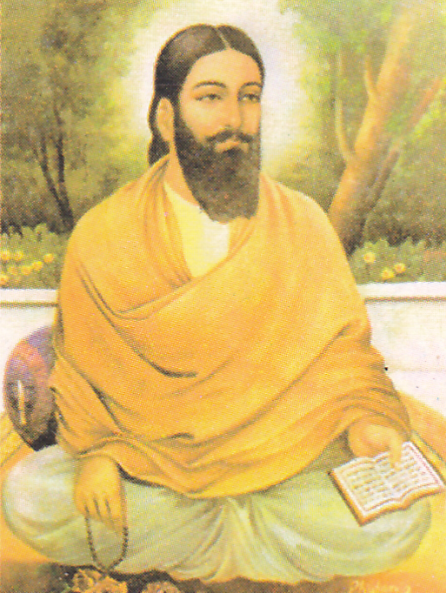
5. Ravidas – The Voice of Equality
Picture Source : Indian Postal Stamp, Wikipedia
Poem: “Begampura sheher ka naam, dukh andohu nahi jisme dham.”
Meaning: “The name of the city is Begampura— A city with no sorrow or suffering.”
Why it resonates today:
This verse is an anthem for every activist, every oppressed voice, and every dreamer of justice. It resonates during Ambedkar Jayanti when India remembers the long fight for equality. Ravidas’s “Begampura” is today’s utopia—where caste, class, and gender don’t define opportunity. It lives in protests, in policy demands, and in people who still believe a better world is possible.
So, Why Now?
Because we are once again in a time where:
Love is politicized.
Faith is divided.
Women are questioning roles.
The marginalized are rising.
And amidst the noise, the soul still longs for truth and tenderness.
These verses are not just relics—they are resonances. They live in:
A girl posting poetry on Instagram about heartbreak and the cosmos.
A Dalit student topping civil services.
A farmer holding onto faith during floods.
Endnote: Bhakti is not Blind
Bhakti is not about superstition or subservience. It is about devotion as power. It is about surrender—not to oppression, but to truth, love, and purpose.
This Pohela Boishakh, Baisakhi, and Ambedkar Jayanti, let us not only light lamps and wear new clothes— Let us light a fire of poetry inside. Let us listen to voices that refused to stay quiet, even centuries ago.
Because maybe, in the quiet of your heart, Mirabai still weeps. Kabir still questions. Ravidas still dreams. Andal still sings. And you, dear reader, still feel.
India is a land of linguistic diversity, with over 19,500 languages and dialects spoken across the country. Given this rich multilingual heritage, education systems in India must embrace and integrate multiple languages to ensure inclusive and effective learning. Multilingual education is not just a pedagogical choice but a necessity in a country where language plays a crucial role in identity, culture, and communication.
Understanding Multilingual Education
Multilingual education refers to the use of two or more languages in teaching and learning processes. In India, this is often implemented through a combination of the mother tongue, regional language, Hindi, and English. The National Education Policy (NEP) 2020 has reinforced the importance of multilingualism, advocating for instruction in the mother tongue at least until Grade 5, and preferably until Grade 8.
Benefits of Multilingual Education in India
1. Strengthens Cognitive Development
Children who learn in multiple languages develop stronger cognitive abilities, including better problem-solving skills, creativity, and adaptability. Studies show that multilingual individuals tend to have enhanced memory retention and mental flexibility.
2. Improves Learning Outcomes
When students are taught in their mother tongue during early education, they grasp concepts more effectively. Research indicates that children learning in their native language perform better in subjects like mathematics and science compared to those who are taught in an unfamiliar language.
3. Preserves Cultural and Linguistic Heritage
Multilingual education helps preserve India’s linguistic diversity by ensuring that regional and tribal languages continue to thrive. It prevents language extinction and fosters a deeper appreciation for India’s rich cultural heritage.
4. Enhances Social Inclusion
Many students, especially from rural and tribal areas, struggle with mainstream education because they are taught in a language unfamiliar to them. Multilingual education promotes inclusivity by ensuring that children from diverse linguistic backgrounds have equal access to quality education.
5. Increases Employment Opportunities
In a globalized world, proficiency in multiple languages opens up better job opportunities. Knowledge of English, along with regional and foreign languages, makes individuals more competitive in national and international markets.
6. Strengthens National Unity
India’s linguistic diversity is often seen as a challenge, but multilingual education can turn it into an asset. Encouraging students to learn multiple Indian languages fosters mutual understanding, reduces language-based discrimination, and strengthens national unity.
Challenges in Implementing Multilingual Education
Despite its advantages, multilingual education in India faces several challenges:
Shortage of trained teachers proficient in multiple languages.
Lack of quality educational materials in regional and tribal languages.
Resistance to change, with many parents preferring English as the medium of instruction.
Administrative hurdles in standardizing multilingual curricula across states.
Way Forward
To fully harness the benefits of multilingual education, India needs:
More teacher training programs focusing on multilingual instruction.
Investment in developing textbooks and digital resources in various languages.
Public awareness campaigns to educate parents on the benefits of mother-tongue-based learning.
Policy implementation and monitoring to ensure effective execution of NEP 2020’s multilingual approach.
Conclusion
Multilingual education is vital for India’s future, as it enhances learning, promotes inclusivity, and preserves cultural heritage. By embracing linguistic diversity in education, India can build a more knowledgeable, united, and globally competitive society. With proper implementation and awareness, multilingual education can become a powerful tool for national development, ensuring that every child, regardless of their linguistic background, receives an equitable and enriching learning experience.
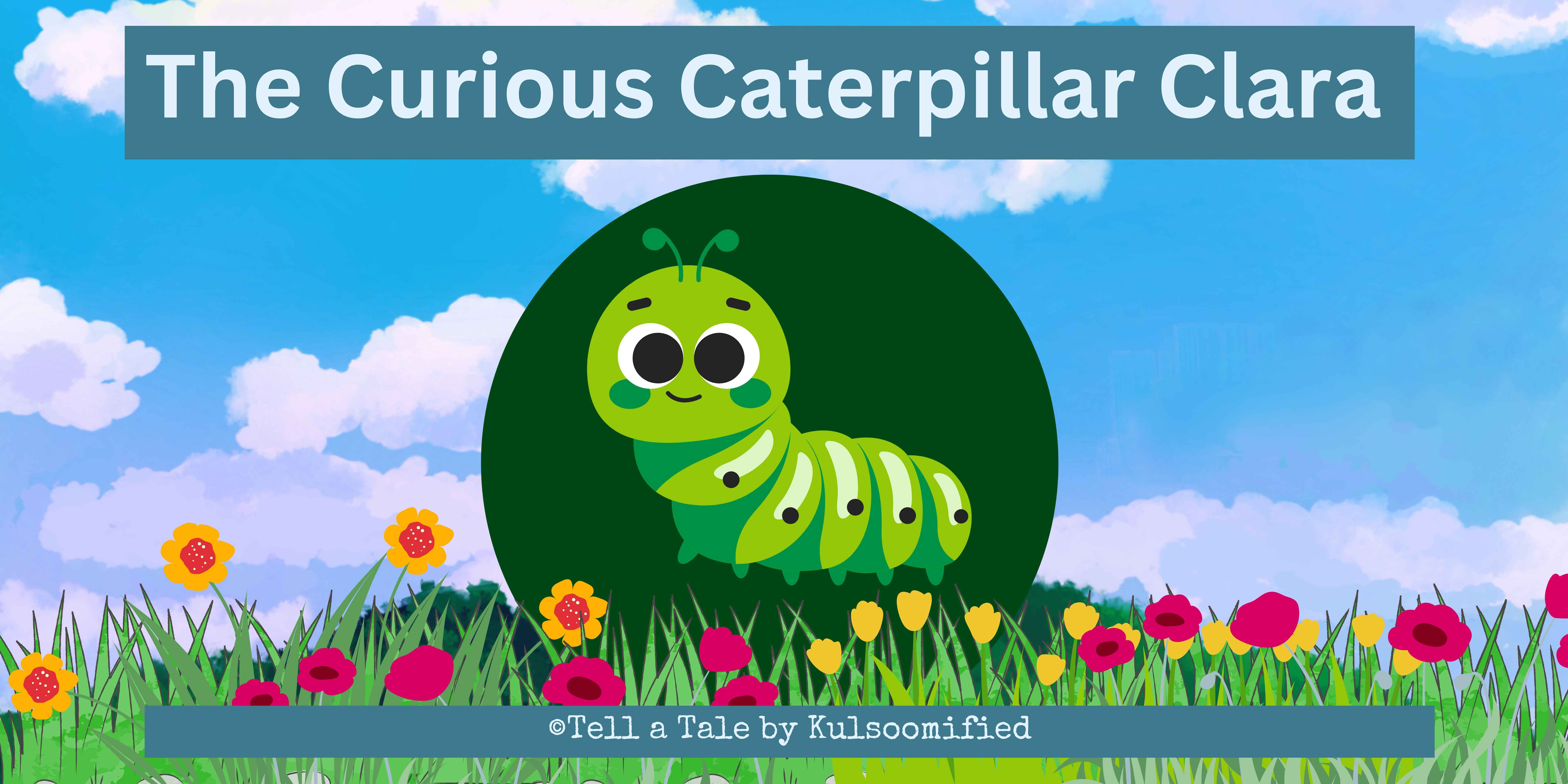
Once upon a time in the green jungle, there lived a little caterpillar named Clara. This little caterpillar is so curious; she likes discovering a lot of goods. She’d crawl over leaves, wiggle through the field, or indeed climb trees just to give herself another view.
One day, while wandering, Clara chanced upon a group of colorful butterflies that sounded to play about. They fluttered gaily in the air and sparkled under the sun with their bodies. She watched in complete astonishment and told herself that she wanted to be as enough and free as they were. There she stood for hours, imagining herself having wings and flying truly grandly over in the treetops.
That evening, Clara was back home describing the dreams to her ma.” Mum, will I one day become a butterfly?” she asked.
Her ma smiled vocally.” Clara, you are destined to do great things. Every creature in the timber has its special trip. Yours will come to light in good time. For now, keep discovering and enjoying the sheer pleasure of being yourself.”
And so, the little girl Clara was inspired by the words of her ma. She began to produce. From fallen leaves, outgrowths, and petals, she made colors on the timber bottom. Trees, by her, were painted with slush and berries. The timber became a living gallery. All the brutes came to see the view.
And Clara slowly started to change. The spirit that raised her appetite to explore and produce bloomed, so did the excitement to enjoy this lift. It was one morning, and she was truly sleepy, and over there on one of the coziest leaves, Clara long napped. When she rose, she was different — light, strong, and ever complete.
She had come a beautiful butterfly. Her wings held colours of the rainbow – all colours, tones, tinctures, tones and tinctures of all the art that she did in the timber. flopping her bodies, she soared into the sky. Feeling it blow beneath her bodies for the truly first time in her life, she rose grandly above the treetops, just the way she always conceited it to be.
Moral of the Story: Embrace your creativity and be your own true-self. Everyone grows at their own pace, and people shine when its their time to shine. All your dreams can just come true, you just need to be patient.







Leave a Reply