Category: Dear Diary

Contains personal experiences of the writer, just like a normal diary does.

  • Pantone and Mocha Mousse

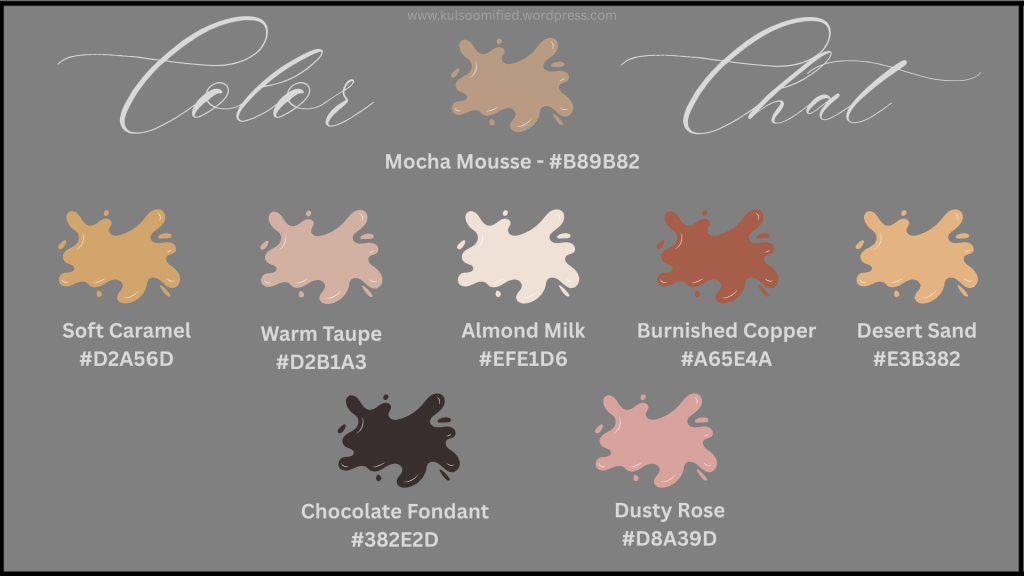
    As we step into the fifth month of 2025, it’s clear that PANTONE 17-1230 Mocha Mousse is doing more than just adding color to our walls and wardrobes—it’s setting the tone for the year. This soft, earthy brown has quietly taken over fashion ramps, interior design palettes, branding visuals, and even our favorite coffee shops. It’s warm, calm, and comforting—a perfect choice for a world that still seeks grounding and balance.

    (Picture Source: coulisse.com)

    But first, let’s understand: What is Pantone?

    The Pantone Color Institute is a global authority on color trends. It’s known for the Pantone Matching System (PMS), which helps designers, brands, and manufacturers match exact shades of color no matter where they are in the world. Since the year 2000, Pantone has been announcing a Color of the Year—a carefully selected shade that reflects the mood, culture, and direction of the world.

    Why does Pantone announce a Color of the Year?

    The color of the year is not just a trend—it’s a message. Pantone’s team of color experts studies fashion shows, art, film, technology, and even political movements to choose a color that represents the global spirit. In 2025, Mocha Mousse was chosen to reflect a need for simplicity, stability, and a return to nature.

    Who follows it and why?

    Rachel Zegler captured attention in a monochrome Mocha Mousse ensemble during her “Snow White” press tour in New York City. (Picture Source: Teen Vouge)

    Designers, fashion houses, makeup brands, interior decorators, and marketers all look to Pantone’s yearly choice for inspiration. It helps them stay relevant, connect emotionally with their audiences, and predict what customers will want. This year, you’ll see Mocha Mousse in earthy-toned blazers, minimalist home interiors, packaging designs, and cozy cafes with a vintage aesthetic.

    //www.instagram.com/embed.js

    What Is PANTONE 17-1230 Mocha Mousse?

    PANTONE 17-1230 Mocha Mousse is a soft, earthy brown shade that brings a sense of warmth, comfort, and timeless elegance. Chosen by the Pantone Color Institute as the Color of the Year for 2025, Mocha Mousse reflects a universal desire for stability and ease in a fast-paced world.

    This cozy and neutral tone feels grounded yet sophisticated — it reminds us of coffee breaks, cozy cashmere, and the calm of nature. It’s a shade that sits beautifully between luxury and simplicity, making it easy to adopt across fashion, beauty, home decor, packaging, and digital design.

    Martha Stewart and Katie Holmes spotted pairing Mocha Mousse with different colors. (Picture Source: People.com)

    Mocha Mousse is thriving in 2025 because of its versatility. Whether in the form of monochromatic fashion looks, soft furnishings like throw blankets and suede sofas, or makeup palettes with bronzy hues, it exudes approachability and natural elegance.

    Designers and brands are embracing it for its calming and nurturing appeal — a perfect companion to a year where mindfulness, sustainability, and authenticity are top priorities.

    Why is Mocha Mousse thriving in 2025?

    As lifestyles slow down and minimalism continues to trend, people are embracing natural and timeless colors. Mocha Mousse fits right in—it’s versatile, neutral, and comforting. It pairs well with soft creams, mossy greens, and even dusty pinks, making it a favorite in both fashion and decor.

    //www.instagram.com/embed.js

    With half the year gone, one thing’s clear: Mocha Mousse isn’t fading anytime soon. It’s grounding, warm, and quietly powerful—just what we need in 2025.

    Thank you for reading!

    Feel free to comment your views below.
    Leave a comment

  • What We Can Learn from Dr. B.R. Ambedkar—And Why It Matters Now More Than Ever

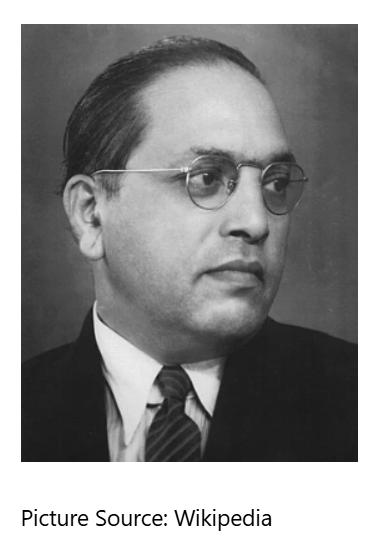
    Every generation has its revolutionaries. But Dr. Bhimrao Ramji Ambedkar was more than that—he was a visionary who saw beyond his time and left behind blueprints for a just, equal, and educated world. He didn’t just fight for rights; he fought for dignity. He didn’t just write laws; he rewrote the story of India’s future.

    In today’s chaotic, divided, fast-changing world, Ambedkar’s teachings feel like a compass—pointing us toward justice, courage, and collective transformation.

    Here’s what we can still learn—and how it can change us.

    📚 1. Education is the Ultimate Weapon

    “Cultivation of mind should be the ultimate aim of human existence.”

    Ambedkar’s entire life is proof that education can shatter chains. He rose from oppression to become one of the most educated men of his time, holding multiple degrees from Columbia, LSE, and more. He believed that true freedom begins in the mind.

    💡 In today’s world:

    In an era where misinformation spreads like wildfire and the education gap still divides rich from poor, Ambedkar’s belief reminds us to invest in knowledge, not just skills. To think critically. To learn—and to teach others.

    🧘🏽‍♂️ 2. Self-Respect is Non-Negotiable

    “I measure the progress of a community by the degree of progress which women have achieved.”

    Ambedkar didn’t just fight for Dalit rights—he fought for human dignity. He believed no man, woman, or child should bow their head due to birth, caste, or gender.

    💡 In today’s world:

    Caste-based discrimination may have changed form but it still exists. So do racism, sexism, classism. His philosophy teaches us to stand tall, to claim our self-worth, and to question systems that try to label us lesser. From rural protests to boardroom diversity conversations—his voice still guides us.

    🏛️ 3. Question Religion, Fight Injustice

    “Religion is for man and not man for religion.”

    Ambedkar’s powerful critique of religion wasn’t about denying spirituality—it was about rejecting systems that use it to justify inequality. His conversion to Buddhism was a radical act of choosing peace and equality over dogma and oppression.

    💡 In today’s world:

    With rising religious intolerance, his wisdom reminds us to separate faith from fanaticism. To choose compassion over ritual. And to create a society where religion heals, not hurts.

    📜 4. Build Institutions, Not Just Movements

    As the architect of the Indian Constitution, Ambedkar created structures that protected the rights of all citizens. He didn’t just revolt—he rebuilt.

    💡 In today’s world:

    Activism today needs more than protests—it needs plans, policies, and perseverance. Whether you’re fighting climate change, casteism, or corruption—build things that last. Create change that outlives you. Like he did.

    🔥 5. Be Unapologetically Brave

    “Life should be great rather than long.”

    Ambedkar was never afraid to speak truth to power, even when it cost him approval, position, or peace. He didn’t wait for permission to fight for what was right.

    💡 In today’s world:

    His spirit lives on in every girl who dares to dream beyond what her village told her, every queer youth demanding visibility, every worker organizing for fair wages. Being Ambedkarite today means being bold, not bitter—and taking the road less safe but more just.

    🌍 Final Thoughts: Ambedkar is Not Just History—He’s the Future

    If you’re looking for a hero who wore no cape, spoke truth like fire, and dreamed of a world where every human is treated as human—Dr. B.R. Ambedkar is not just a chapter in your textbook. He is a mirror, a map, and a mantra for our times.

    To walk in his footsteps doesn’t mean being perfect.
    It means being awake.
    Being aware.
    Being active.

    Because the India Ambedkar dreamed of?
    It’s still being built.
    And we are the builders now.

    Thank you for reading!

  • Voices of the Bhakti Movement: Poems that Still Resonate

    As mid-April blossoms into Pohela Boishakh, Baisakhi, and Ambedkar Jayanti, we witness not just seasonal or cultural shifts—but spiritual reminders. These dates mark beginnings, harvests, revolutions of identity, and the dignity of selfhood. What better moment to revisit the deeply personal and profoundly political verses of the Bhakti Movement?

    The Bhakti saints spoke in simple tongues, but their words had the weight of mountains. They shattered caste walls, defied societal norms, and chose poetry as their protest and prayer.

    These poems weren’t written for scholars. They were written for people like us—soulful, weary, hopeful. And yes, they still speak.

    1. Mirabai – The Lover Devotee of Krishna

    Picture Source : Wikipedia

    Poem:
    “Mere to Giridhar Gopal, doosro na koi,
    Jaake sir mor mukut, mero pati soi.”

    Meaning:
    “My only beloved is Giridhar Gopal (Krishna), I belong to none else.
    The one who wears the peacock feather crown—that alone is my husband.”

    Why it resonates today:

    Mirabai’s defiance of patriarchal norms mirrors the journeys of modern women choosing self-love over societal pressure, or standing by partners and dreams that the world may not approve of. Her devotion is echoed in every woman choosing authenticity over conformity. In interfaith relationships, LGBTQ+ love, and bold artistic self-expression—Mira still sings.

    2. Kabir – The Weaver of Eternal Truths

    Picture Source: artofit.org

    Poem:
    “Bura jo dekhan main chala, bura na milya koi,
    Jo man khoja aapna, mujhse bura na koi.”

    Meaning:
    “I went out to find evil in others, but found none.
    When I looked within myself, I realized none was worse than me.”

    Why it resonates today:

    In a digital age full of cancel culture, online outrage, and blaming others for everything—from politics to personal woes—Kabir reminds us to turn inward. This poem is a guide to emotional maturity and self-awareness. It’s a timeless push toward introspection over judgment.

    3. Tukaram – The Farmer Mystic

    Picture Source: Pinterest

    Poem:
    “Pandharicha mahatva kon jane re,
    Techi jane jyancha bhaktichya bhare.”

    Meaning:
    “Who truly knows the greatness of Pandharpur?
    Only those drenched in the flood of devotion.”

    Why it resonates today:

    Tukaram’s poetry connects deeply with today’s grassroots voices, farmers’ protests, and simple folk whose faith is their survival. His verses still sing in every rural home where belief and struggle live side by side. In a world that often ignores the rural, the underpaid, and the overlooked—Tukaram remains a voice of dignity.

    4. Andal – The Divine Girl of Tamil Bhakti

    Picture Source : Wikipedia

    Poem (from Tiruppavai):
    “Margazhi thingal madhi niraindha nannalal
    Neerada podhuvir, podhumino!”

    Meaning:
    “This is the auspicious month of Margazhi, lit with moonlight.
    Come, let us bathe and celebrate together!”

    Why it resonates today:

    Andal’s poetry feels like a call to collective feminine joy. In today’s world of sisterhood circles, girlhood revivals, women’s retreats, and sacred feminine movements, her invitation to spiritually bathe together is an ancient version of modern self-care, sisterhood, and divine femininity.

    5. Ravidas – The Voice of Equality

    Picture Source : Indian Postal Stamp, Wikipedia

    Poem:
    “Begampura sheher ka naam, dukh andohu nahi jisme dham.”

    Meaning:
    “The name of the city is Begampura—
    A city with no sorrow or suffering.”

    Why it resonates today:

    This verse is an anthem for every activist, every oppressed voice, and every dreamer of justice. It resonates during Ambedkar Jayanti when India remembers the long fight for equality. Ravidas’s “Begampura” is today’s utopia—where caste, class, and gender don’t define opportunity. It lives in protests, in policy demands, and in people who still believe a better world is possible.

    So, Why Now?

    Because we are once again in a time where:

    • Love is politicized.
    • Faith is divided.
    • Women are questioning roles.
    • The marginalized are rising.
    • And amidst the noise, the soul still longs for truth and tenderness.

    These verses are not just relics—they are resonances.
    They live in:

    • A girl posting poetry on Instagram about heartbreak and the cosmos.
    • A Dalit student topping civil services.
    • A farmer holding onto faith during floods.

    Endnote: Bhakti is not Blind

    Bhakti is not about superstition or subservience. It is about devotion as power.
    It is about surrender—not to oppression, but to truth, love, and purpose.

    This Pohela Boishakh, Baisakhi, and Ambedkar Jayanti, let us not only light lamps and wear new clothes—
    Let us light a fire of poetry inside.
    Let us listen to voices that refused to stay quiet, even centuries ago.

    Because maybe, in the quiet of your heart,
    Mirabai still weeps.
    Kabir still questions.
    Ravidas still dreams.
    Andal still sings.
    And you, dear reader, still feel.

    Thank you for reading!

  • The Importance of Multilingual Education in India

    By: Kulsoom Abid

    India is a land of linguistic diversity, with over 19,500 languages and dialects spoken across the country. Given this rich multilingual heritage, education systems in India must embrace and integrate multiple languages to ensure inclusive and effective learning. Multilingual education is not just a pedagogical choice but a necessity in a country where language plays a crucial role in identity, culture, and communication.

    Understanding Multilingual Education

    Multilingual education refers to the use of two or more languages in teaching and learning processes. In India, this is often implemented through a combination of the mother tongue, regional language, Hindi, and English. The National Education Policy (NEP) 2020 has reinforced the importance of multilingualism, advocating for instruction in the mother tongue at least until Grade 5, and preferably until Grade 8.

    Benefits of Multilingual Education in India

    1. Strengthens Cognitive Development

    Children who learn in multiple languages develop stronger cognitive abilities, including better problem-solving skills, creativity, and adaptability. Studies show that multilingual individuals tend to have enhanced memory retention and mental flexibility.

    2. Improves Learning Outcomes

    When students are taught in their mother tongue during early education, they grasp concepts more effectively. Research indicates that children learning in their native language perform better in subjects like mathematics and science compared to those who are taught in an unfamiliar language.

    3. Preserves Cultural and Linguistic Heritage

    Multilingual education helps preserve India’s linguistic diversity by ensuring that regional and tribal languages continue to thrive. It prevents language extinction and fosters a deeper appreciation for India’s rich cultural heritage.

    4. Enhances Social Inclusion

    Many students, especially from rural and tribal areas, struggle with mainstream education because they are taught in a language unfamiliar to them. Multilingual education promotes inclusivity by ensuring that children from diverse linguistic backgrounds have equal access to quality education.

    5. Increases Employment Opportunities

    In a globalized world, proficiency in multiple languages opens up better job opportunities. Knowledge of English, along with regional and foreign languages, makes individuals more competitive in national and international markets.

    6. Strengthens National Unity

    India’s linguistic diversity is often seen as a challenge, but multilingual education can turn it into an asset. Encouraging students to learn multiple Indian languages fosters mutual understanding, reduces language-based discrimination, and strengthens national unity.

    Challenges in Implementing Multilingual Education

    Despite its advantages, multilingual education in India faces several challenges:

    • Shortage of trained teachers proficient in multiple languages.
    • Lack of quality educational materials in regional and tribal languages.
    • Resistance to change, with many parents preferring English as the medium of instruction.
    • Administrative hurdles in standardizing multilingual curricula across states.

    Way Forward

    To fully harness the benefits of multilingual education, India needs:

    • More teacher training programs focusing on multilingual instruction.
    • Investment in developing textbooks and digital resources in various languages.
    • Public awareness campaigns to educate parents on the benefits of mother-tongue-based learning.
    • Policy implementation and monitoring to ensure effective execution of NEP 2020’s multilingual approach.

    Conclusion

    Multilingual education is vital for India’s future, as it enhances learning, promotes inclusivity, and preserves cultural heritage. By embracing linguistic diversity in education, India can build a more knowledgeable, united, and globally competitive society. With proper implementation and awareness, multilingual education can become a powerful tool for national development, ensuring that every child, regardless of their linguistic background, receives an equitable and enriching learning experience.

    Thank you for reading!

  • Color Of The Sky

    Someone once asked me, “how would you describe the color of the sky if you were not allowed to use the words blue, cloudy, white, black and grey?’

    I thought for a while and then I picked up a pen and a paper, and this is what I came up with.

    You can find everything up there if you look for it. Grass not green and the flowers not purple, mountains not brown and rusty not a pebble. You see everything in the color of purity when it’s morning and you see everything magically colorful as the sun sets. When the night rises you fall in love with the shimmery dreams twinkling on the immensely wide canvas. The broken, the lost, the forgotten, the lovers, the poets, the over-thinkers and many others who believe in magic, look up at the vastness with hope and paint their dreams.

    So, if you ask me what is the color of the sky? I would say it is colorless. And every tint, tone or shade you see there is purely of dreams, wishes, hopes, and imaginations.

    -Kulsoom Abid

    Thank you for reading.

  • A Piece Of My Diary

    I wrote this in my diary when I was 16.

    For me, life is

    The flowing river, the blowing wind, the sound of the rain, the laughter of a baby, the beautiful sunset, a cup of hot chocolate in the winters, the evenings of summer, the night sky covered with stars, the rainbow after the rain, the lovely mornings, the dreams you can die for, the music that can heal every wound and being yourself among the crowd.

    -Kulsoom Abid

    Thank you for reading.

  • Change

    Image Source : Pinterest

    I have never been comfortable with changes. I am someone who gets extremely attached to things, places and people. I don’t like when people leave or a book ends or when we move to a different place, it makes me feel sad. You can say I am bad at letting go which makes me overthink all the “ifs” and “buts”, and I eventually end up feeling upset and empty sometimes.
    But what I have seen is every single change in my life has taken me to a better place. Every beautiful book that ended took me to another lovely story, every single friend I lost brought me to some amazing people and the list goes on.
    Life is unpredictable but hope and acceptance are the most powerful weapons you can keep by your side. It’s like swimming into a flowing river that ends up meeting the ocean, you never know what’s inside the ocean, so you must enjoy every change every experience that the journey to the ocean gives you. Because we are what our experiences make us and of course change is inevitable. Things will keep on changing accept it, prepare yourself and never ever lose hope and your faith in God, because the best is yet to come.

    -©Kulsoom Abid

    Your views, reviews and suggestions are most welcomed. Feel free to comment below.

    Thank you for reading.

  • Giving Up

    Photographer : ©Kulsoom Abid

    Giving up is like running away from your problems. People say give up if you can’t get what you want and try something else. But I say never give up.

    Don’t listen to your brain because it will always reason with you. It will always make you doubt yourself with tons of “what if”, “but”, “maybe” etc.

    Just ask your heart this simple question, “how much this matters to me? ” or you can try “how much do I love this? ”

    It can be anything. It can be a person, it can be a hobby you want to pursue as a career, it can be any goal you want to achieve, it can be a dream you want to fulfil, it can literally be anything.

    Your heart will give you the true and unbiased answer of what you really want to do. And if your heart says “it matters to me alot” or “I love it so much”. Then my dear friend I request you not to give up.

    I won’t lie to you, it will be extremely difficult and there will be times when you will doubt your decision and sometimes you will think that people were right and you’ll consider giving up. And trust me at that time giving up will be the easiest and safest option. But please don’t.

    We have one life. We live only once. And everything, every single thing we truly love is worth the hard work, is worth trying.

    You will have to deal with millions of “maybe this is not the right time”, “maybe this is not the right place” and “what will people think about me”.

    So here’s a friendly reminder, you are the one who is going to decide the right time and the right place. I do believe in God and I believe God always helps the people who help themselves. Write your own story, believe in your aim, in yourself and don’t let anyone tell you otherwise.

    And “people” will say whatever they want to say. Trust me it has nothing to do with you and everything to do with themselves. Everyone has to face critics in their journey. Use them as your motivation. Just remember that after quitting because of “what will people say/think about me” , one day when you will be regretting this whole decision making process and the outcome, those “people” will be nowhere to console you. All you will ever hear them say will be “ you shouldn’t have given up if you loved it so much”.

    We are humans, we are hypocrites don’t listen to us. Listen to your inner voice and your heart. We will make you think you are a fool trying to fulfil your dreams but never listen to us. Because all we want is to pull you down to where we are and make you like ourselves, so do yourself a favour and don’t listen to us.

    If you are a bird or a fish and you listen to a giraffe or a plant, then just imagine what you’ll end up doing. Or let’s see it this way, if you are birds and are of same breed but u have the ability to fly slightly higher than the others but you listen to them and hence fly at the same level as them. You are clearly doing injustice to yourself.

    So I request you, don’t give up . We live once. Let’s spend it doing what makes us happy.

    Think about it. Your view, reviews, suggestions and criticisms are most welcomed. Feel free to share it with someone you know needs this right now. Let’s tell each other that not all humans are bad and we can do good things too, we can support and motivate too.

    Thank you for reading.

  • Opening up…

    Today I’m going to open up to you all. While thinking about this post today, I felt how difficult it is to open up or talk to about something. We have this constant thing going on in our head that, “what if people don’t understand”, ” Should I even do this?? ” , “what if I get trolled”, etc.

    Asking people to talk about their problems and experiences is easier than doing it. So I can’t ask you all to talk about such things until and unless I do it myself first.

    So here I am.

    There was a time in my life when things weren’t good. I had shifted to new school, I was not being able to adjust there, I wasn’t scoring well, I was being bullied, I was being called names, and last be not the least got backstabbed by friends, I thought I would have forever. And all these things were going on at the same time.

    I hated my life. I hated school. I hated everyone and everything. And the worst part was I had no one to share all these things with. I had no one to talk and trust to. I was scared, lonely, unsure, fragile and depressed. I used to cry at nights and go back to “school” in the mornings.

    And at a point things became so worse that I thought about killing myself. Yes I did. I was trying to look as if nothing bad has ever happened to me for the sake of my family. I didn’t want to see them hurt and suffer because of me. I thought if I will end myself, everything will become perfect again. My parents and my sibling will carry on with their lives and I’ll take all my problems and troubles with me.

    But I loved my family too much to be unsure about it. So I just observed them one day, to see if they will really be happy after I’ll be gone. I realised, they won’t. I, as if for the first time, noticed how much they love me. Everything they talk or plan about includes me. I was heartbroken. And I thought I will tolerate all those things for them. I didn’t want to hurt them no matter what.

    Few days passed, and I continued my routine. But one day I got so bullied in school that it was a last nail in the coffin for me. I tried to control my tears and did something I never thought I was capable of. I went to my class teacher and made her promise that whatever I’m going to tell her will stay between the two of us and won’t go to my parents or any other higher authorities.

    I was taking a huge risk by telling her those things but I had to either ask for help or kill myself. And no matter what I was definitely not ready to give up and let those stupid people win. I was scared while talking to her but she told me she won’t be able to help me if I didn’t be honest with her. So I spoke everything like a trained parrot. I told her how I’m getting bullied and how I thought to end my life. And after, what seemed like eternity, I felt good. I felt relived that I finally spoke up.

    We together decided to take one step at a time. Firstly I improved my grades and participated in the competitions and events. I strengthened my academic record first. And as soon as I started focusing on myself more than my problems, things automatically started to fall in place.

    Due to the competitions, I became more confident and outspoken than I was. Eventually the bullying stopped. I made few new and true friends. Sometimes people used to call me names too but I was so satisfied with myself that it stopped bothering me. But whenever it did, I took stand for myself.

    Pages: 1 2 3

  • Real Success

    Originally written by : ©Kulsoom Abid
    Image source : YourQuote App

    We often assume that success is all about managing our professional lives efficiently. But I don’t agree with this.

    According to me, real success is managing both, your professional as well as your personal lives effectively.

    Don’t take me wrong. I’m not saying being goal-oriented is a bad thing. But being ONLY goal-oriented and neglecting your family, true friends and loved ones in the process of achieving your dreams is certainly not an ideal thing to do.

    I know sometimes this can be really difficult to do. But there is always a solution to every problem. And in this case, Time management and Discipline is the key.

    There is no gain without pain. What is the use of being on the top of your career if you don’t have people who appreciate and love you for who you truly are and to celebrate your achievements with? Instead of those who will be with you only because of your position?

    Think about it. And please let me know your views in the comment below.

    You can also suggest me some topics to write about. I would love your suggestions.

    Thank you for reading.