As mid-April blossoms into Pohela Boishakh, Baisakhi, and Ambedkar Jayanti, we witness not just seasonal or cultural shifts—but spiritual reminders. These dates mark beginnings, harvests, revolutions of identity, and the dignity of selfhood. What better moment to revisit the deeply personal and profoundly political verses of the Bhakti Movement?
The Bhakti saints spoke in simple tongues, but their words had the weight of mountains. They shattered caste walls, defied societal norms, and chose poetry as their protest and prayer.
These poems weren’t written for scholars. They were written for people like us—soulful, weary, hopeful. And yes, they still speak.
1. Mirabai – The Lover Devotee of Krishna

Picture Source : Wikipedia
Poem:
“Mere to Giridhar Gopal, doosro na koi,
Jaake sir mor mukut, mero pati soi.”
Meaning:
“My only beloved is Giridhar Gopal (Krishna), I belong to none else.
The one who wears the peacock feather crown—that alone is my husband.”
Why it resonates today:
Mirabai’s defiance of patriarchal norms mirrors the journeys of modern women choosing self-love over societal pressure, or standing by partners and dreams that the world may not approve of. Her devotion is echoed in every woman choosing authenticity over conformity. In interfaith relationships, LGBTQ+ love, and bold artistic self-expression—Mira still sings.
2. Kabir – The Weaver of Eternal Truths

Picture Source: artofit.org
Poem:
“Bura jo dekhan main chala, bura na milya koi,
Jo man khoja aapna, mujhse bura na koi.”
Meaning:
“I went out to find evil in others, but found none.
When I looked within myself, I realized none was worse than me.”
Why it resonates today:
In a digital age full of cancel culture, online outrage, and blaming others for everything—from politics to personal woes—Kabir reminds us to turn inward. This poem is a guide to emotional maturity and self-awareness. It’s a timeless push toward introspection over judgment.
3. Tukaram – The Farmer Mystic

Picture Source: Pinterest
Poem:
“Pandharicha mahatva kon jane re,
Techi jane jyancha bhaktichya bhare.”
Meaning:
“Who truly knows the greatness of Pandharpur?
Only those drenched in the flood of devotion.”
Why it resonates today:
Tukaram’s poetry connects deeply with today’s grassroots voices, farmers’ protests, and simple folk whose faith is their survival. His verses still sing in every rural home where belief and struggle live side by side. In a world that often ignores the rural, the underpaid, and the overlooked—Tukaram remains a voice of dignity.
4. Andal – The Divine Girl of Tamil Bhakti

Picture Source : Wikipedia
Poem (from Tiruppavai):
“Margazhi thingal madhi niraindha nannalal
Neerada podhuvir, podhumino!”
Meaning:
“This is the auspicious month of Margazhi, lit with moonlight.
Come, let us bathe and celebrate together!”
Why it resonates today:
Andal’s poetry feels like a call to collective feminine joy. In today’s world of sisterhood circles, girlhood revivals, women’s retreats, and sacred feminine movements, her invitation to spiritually bathe together is an ancient version of modern self-care, sisterhood, and divine femininity.
5. Ravidas – The Voice of Equality
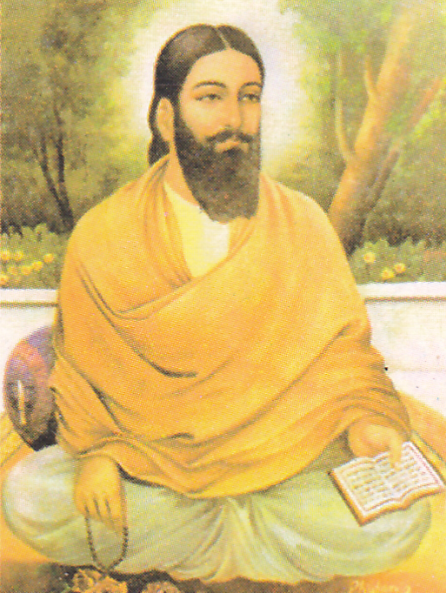
Picture Source : Indian Postal Stamp, Wikipedia
Poem:
“Begampura sheher ka naam, dukh andohu nahi jisme dham.”
Meaning:
“The name of the city is Begampura—
A city with no sorrow or suffering.”
Why it resonates today:
This verse is an anthem for every activist, every oppressed voice, and every dreamer of justice. It resonates during Ambedkar Jayanti when India remembers the long fight for equality. Ravidas’s “Begampura” is today’s utopia—where caste, class, and gender don’t define opportunity. It lives in protests, in policy demands, and in people who still believe a better world is possible.
So, Why Now?
Because we are once again in a time where:
- Love is politicized.
- Faith is divided.
- Women are questioning roles.
- The marginalized are rising.
- And amidst the noise, the soul still longs for truth and tenderness.
These verses are not just relics—they are resonances.
They live in:
- A girl posting poetry on Instagram about heartbreak and the cosmos.
- A Dalit student topping civil services.
- A farmer holding onto faith during floods.
Endnote: Bhakti is not Blind
Bhakti is not about superstition or subservience. It is about devotion as power.
It is about surrender—not to oppression, but to truth, love, and purpose.
This Pohela Boishakh, Baisakhi, and Ambedkar Jayanti, let us not only light lamps and wear new clothes—
Let us light a fire of poetry inside.
Let us listen to voices that refused to stay quiet, even centuries ago.
Because maybe, in the quiet of your heart,
Mirabai still weeps.
Kabir still questions.
Ravidas still dreams.
Andal still sings.
And you, dear reader, still feel.
Thank you for reading!